Consultant, Trainer or Vendor: What Each One Actually Does
The three roles overlap in marketing language and diverge in practice. The table below sets out the difference in plain terms so you can match the role to your problem.
| AI adoption consultant | AI trainer | AI vendor | |
|---|---|---|---|
| Core job | Change how the company uses AI, from leadership intent to daily habits | Teach a skill to a group | Build, install or license a system |
| Works with | Leadership team and one or more working teams | A class of participants | IT and the project sponsor |
| Material | Your processes, documents and decisions | A curriculum, often generic | Their product |
| Success looks like | Named processes faster or better a month later | Participants can do the thing taught | System live and stable |
| Stops at | Agreed outcomes and a plan for the next team | End of the course | Go-live and support |
| Typical gap left | Does not build software | Leadership and follow-up | Adoption and judgement |
Sylvia Avila's practice combines the first two roles: she is an adoption partner who trains. She is not a vendor and does not build software. If your need is a system, hire a vendor and bring in adoption work alongside it.
What Singapore Companies Typically Need First
In conversations with Singapore leaders the same three needs come up, usually in this order. Most companies are tempted to start with the third one. The first two are cheaper and make the third work.
- 01Leadership clarity. Your senior team needs to agree, in one page, where AI should make a difference in the next twelve months and what is off limits. Without this, every team interprets “use AI more” differently and nothing compounds.
- 02Confident, consistent use in one team. Pick a department where better AI use would be visible, such as operations, marketing, finance or client service. Train that team on their real work so everyone leaves with something running. This is where a workshop day earns its keep.
- 03Workflow redesign. Once a team is confident, redesign two or three recurring processes so AI does a defined part and a person owns the result. Only now does a system, an automation or a vendor conversation make sense, because you know what you are automating.
AI is not a tool problem, it's a thinking problem. Singapore companies that skip the first two steps and go straight to procurement usually end up with a well-built system that nobody uses with judgement.
Funding Context in Singapore
Singapore has employer-facing support for enterprise development and training, and it is worth checking before you set a budget. The details below were checked against the issuing agencies' own websites at the time of writing. Eligibility and coverage depend on your company and the specific programme, so confirm directly with the agency.
- Enterprise Singapore states on its Budget 2026 page that the Productivity Solutions Grant (PSG) has been expanded to support more digital and AI-enabled solutions, and that the PSG, the Enterprise Development Grant (EDG) and Market Readiness Assistance (MRA) will be streamlined into a single scheme called EDGE, available to all Singapore businesses including non-SMEs. Businesses can continue applying for the existing grants through the Business Grants Portal in the meantime.
- Enterprise Singapore's Budget 2026 page also describes a new programme, Champions of AI, aimed at leading companies with the ambition to use AI to transform their businesses comprehensively.
- SkillsFuture Singapore runs the SkillsFuture Enterprise Credit for employers. Check the SkillsFuture Singapore website for current eligibility, amounts and what training qualifies.
Sylvia's Singapore delivery is not tied to any scheme and does not depend on grant approval. If your company plans to use a scheme, confirm the rules with the agency first, then scope the engagement to fit.
How a Singapore Engagement With Sylvia Runs
Sylvia is based in Kuala Lumpur and delivers in Singapore in person. The engagement is designed so that the travel is invisible to you: the preparation happens remotely, the delivery happens on-site, and the follow-up happens on a call.
- 01Clarity call (remote, free, 45 minutes). You describe where your company stands. You leave with a clearer picture of what to do first, whether or not you proceed.
- 02Leadership briefing (remote or on-site, 60 to 90 minutes). Your senior team aligns on where AI fits, what success looks like, and which team goes first. This step is what makes the workshop land.
- 03Preparation (remote, one to two weeks). Sylvia gathers the team's real tasks and documents, agrees the tool set you are comfortable with, and tailors the examples to your industry.
- 04The AI Confidence workshop (on-site in Singapore, one day). Seven training hours, usually 9:00 AM to 5:00 PM with a one-hour lunch, for up to 20 participants at your workplace or a venue of your choice. Participants learn the 4D Framework (Delegation, Description, Discernment, Diligence) and work on their own tasks. Everyone leaves with their own working AI assistant. A two-day version adds more hands-on labs and covers scaling AI use across the team.
- 05Follow-up (remote, about 30 days later). A working session to fix what is not sticking, review the redesigned processes, and plan the next team.
Larger groups are split into multiple sessions so that everyone builds something during the day. Mixed-experience groups work well, and no prior AI experience is needed.
A Checklist for Choosing an AI Adoption Consultant in Singapore
Use this list on any consultant, trainer or partner you are considering. The more boxes ticked, the more likely the engagement changes how your team works rather than what it knows.
- 01They involve your leadership team, not just the participants, and can explain why.
- 02Participants work on their own documents and tasks, not on generic examples.
- 03Every participant leaves with something working, not only a certificate or a prompt list.
- 04They teach a way of thinking that survives the next tool update, not a specific product.
- 05Groups are small enough for everyone to build, typically 20 or fewer.
- 06Follow-up is built into the engagement, with a date set before the workshop day ends.
- 07They have run operations inside a real company, because adoption is an operating problem.
- 08They can show verified results from previous groups, with the sample size stated.
- 09They tell you plainly what they do not do, and who to call for that.
- 10The cost model is clear before you commit, with no per-head surprises.
What to Expect on Cost
Sylvia's corporate work in Singapore is priced per group per day for the workshop, with the leadership briefing and follow-up scoped alongside. Pricing depends on group size and needs, so request a quote. Travel from Kuala Lumpur is built into the Singapore engagement rather than billed as a surprise line.
As a rule of thumb for the category: per-group pricing rewards you for filling the room, so a department of 15 to 20 costs the same per day as a group of eight. Per-participant pricing, common with public courses, is cheaper for two or three people and more expensive for a whole team. Consultancy day rates for a team of consultants sit well above either.
Ask any provider to state their cost model in one sentence. If the answer needs a slide, the model is probably built to be hard to compare.
About Sylvia Avila
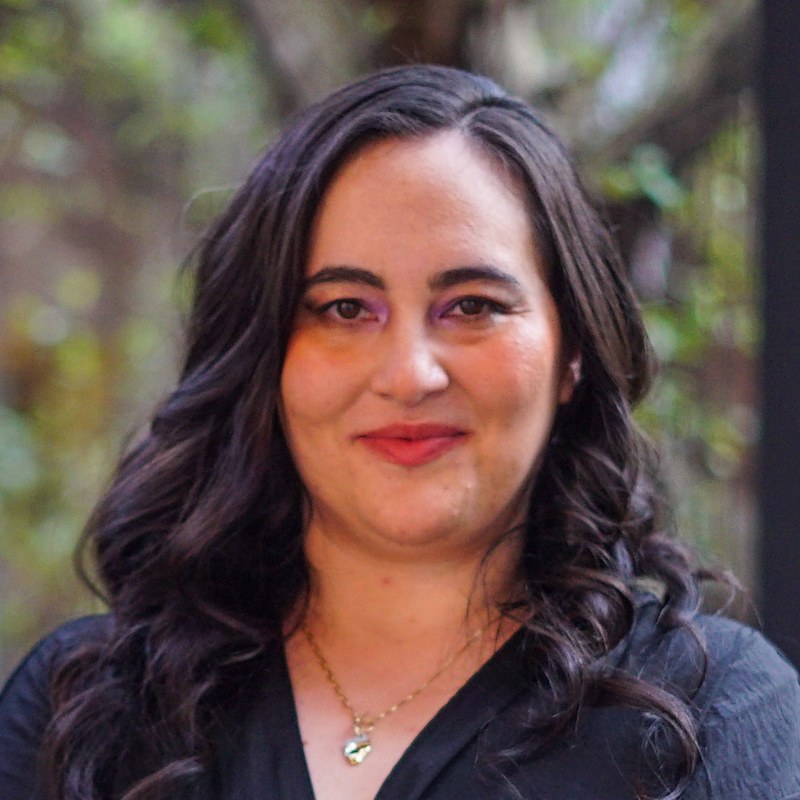
Sylvia Avila is an AI Adoption Partner & Leadership Advisor based in Kuala Lumpur, Malaysia, delivering in Malaysia and Singapore. She spent seven years at Mindvalley in operations leadership roles, including Senior Projects and Operations Manager in Business Operations, and founded her practice in 2026. She holds two degrees from Universidad de los Andes in Bogotá, works in English and Spanish, and completed Anthropic's AI Fluency: Framework & Foundations programme in 2026.
From 100 verified workshop survey responses across hospitality, tech and manufacturing, 90% said it was a worthwhile use of their time, confidence using AI rose 42% (from 3.0 to 4.3 out of 5), and 84% left ready to apply what they learned immediately.